Isomere, Inc. — Strep-Detect
The cost of getting the sample wrong.
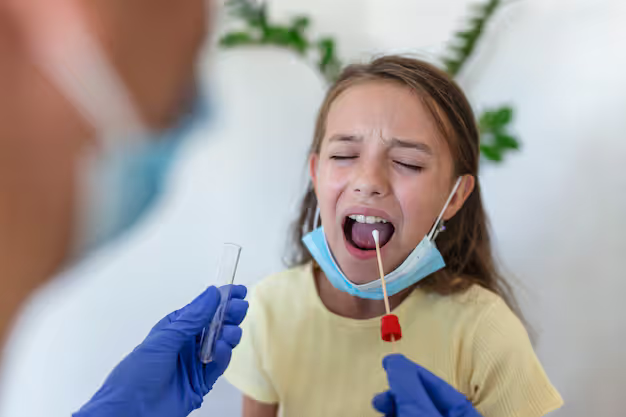
Gagging, tears, and inconsistent samples are treated as the unavoidable price of diagnosing strep in children. They aren't.
Eliminating the swab.
The current standard of care relies on physical agitation to collect bacteria. Done correctly, it means swabbing both tonsils and the posterior pharynx — precisely the maneuver that triggers the gag reflex in a child.
What should take two minutes becomes a fifteen-minute negotiation with an uncooperative patient. The clinician backs off, the sample comes up short, and an inadequate sample is one of the most common paths to a false negative.
Strep-Detect replaces the swab with a single-use spray applied to the back of the throat. No agitation, no contact, no gag reflex.
Detecting the infection, not the residue.
Conventional rapid tests look for a surface antigen — a structure that's present whether the bacteria are alive, dead, or simply riding along in an asymptomatic carrier. A positive result doesn't tell you which.
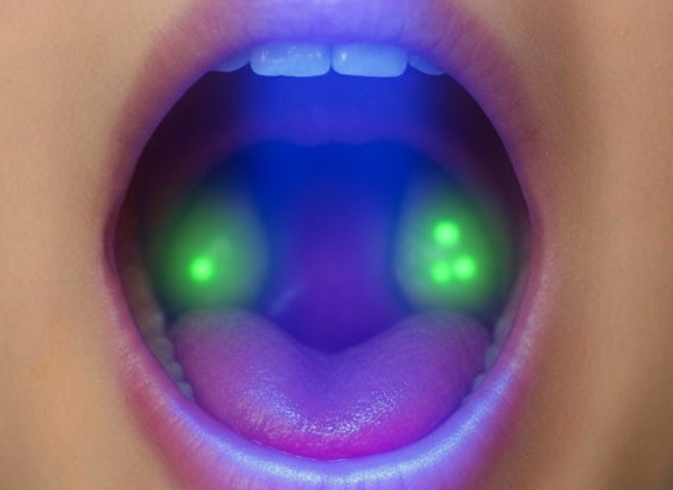
Strep-Detect looks for something else: evidence that Group A Strep is alive and active right now. The spray carries a proprietary probe that produces a fluorescent signal in the presence of that activity, read under a handheld light. No incubation, no test strip, no sample leaves the patient.
The design intent is to separate active infection from carriage — a distinction antigen tests are not built to make, and the reason carriers are routinely given antibiotics they don't need.
Strep-Detect is investigational. Analytical and clinical performance are being established through validation studies now underway; no performance claims are made here.
A global problem, largely untested.
Group A strep causes hundreds of millions of cases of pharyngitis worldwide each year. Only a fraction are ever tested. The rest are treated on guesswork, or not treated at all.
The barrier isn't cost, and it isn't access. It's the swab. A test people will actually submit to — and submit their children to — changes who gets diagnosed, how quickly antibiotics are aimed correctly, and how much untreated strep circulates through classrooms and workplaces.
That is the problem we are building to solve.
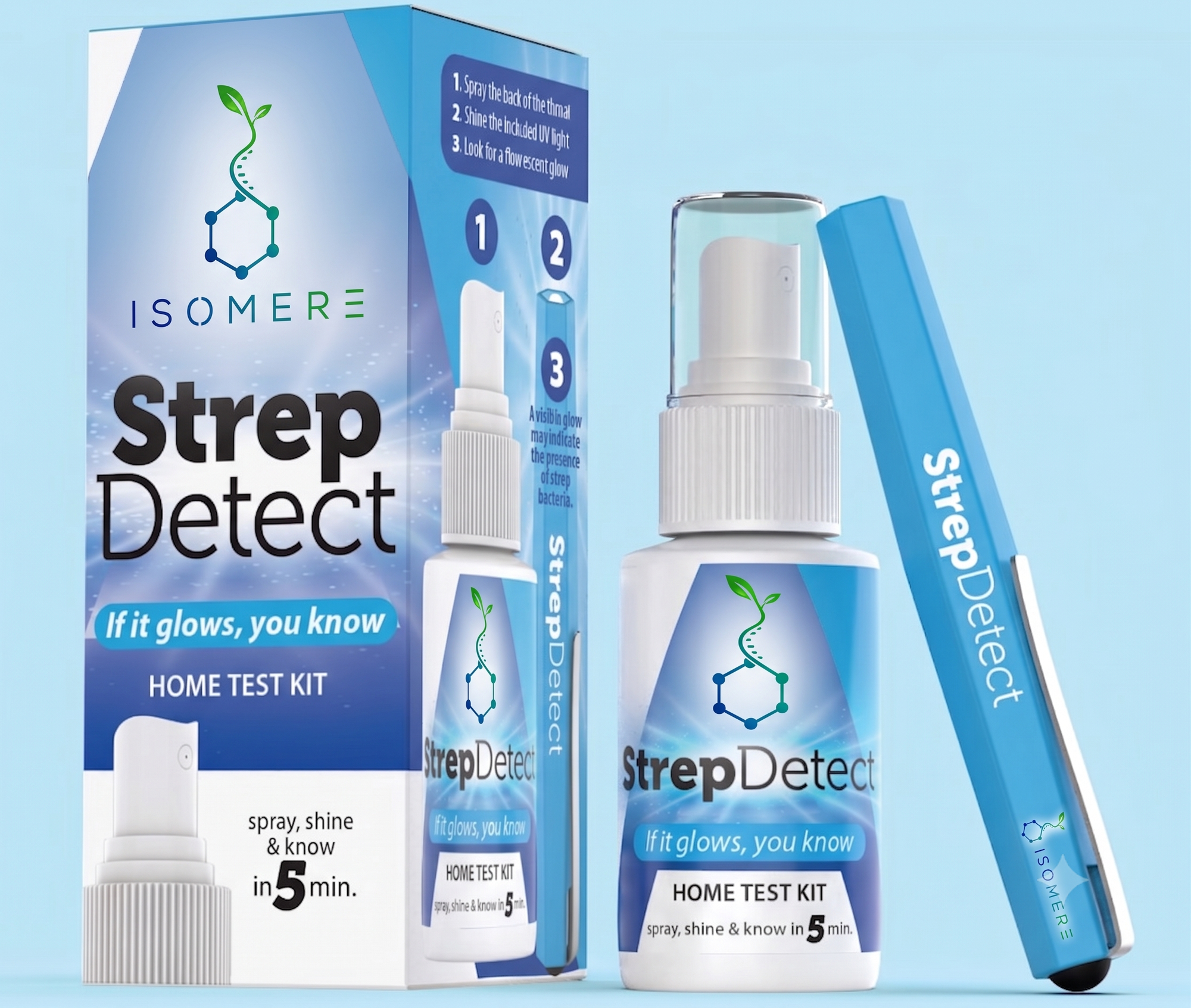
Spray. Shine. Glow. Know.
See the recognition →Strep-Detect is an investigational device. Not available for sale. Limited by law to investigational use.